
On This Page
GTA 6 will include more than 170 animal species, according to Game Informer’s September 29 developer interview. Those species span land, air and sea. The figure describes variety, rather than the number of animals visible at once or a guaranteed count of encounters in any particular location within the game.[1]
Native Wildlife and Invasive Species
Examples include alligators, flamingos, pelicans and manatees. Game Informer also distinguishes native wildlife from invasive species such as green iguanas and rhesus macaques. Invasive refers to species spreading outside their original habitat. That distinction helps explain Leonida’s regional wildlife; it does not establish the individual behaviour of every named animal in gameplay.[1]
Changes to Fur, Feathers and Surfaces
New hair, fur and feather systems are reported to extend animal rendering. The interview also describes shimmering surfaces, biological light and translucency. These concern animals’ appearance and the way light interacts with their bodies. They do not automatically establish hunting rules or particular loot items, so we distinguish visual properties from gameplay interactions.[1]
Official Images Provide Regional Examples
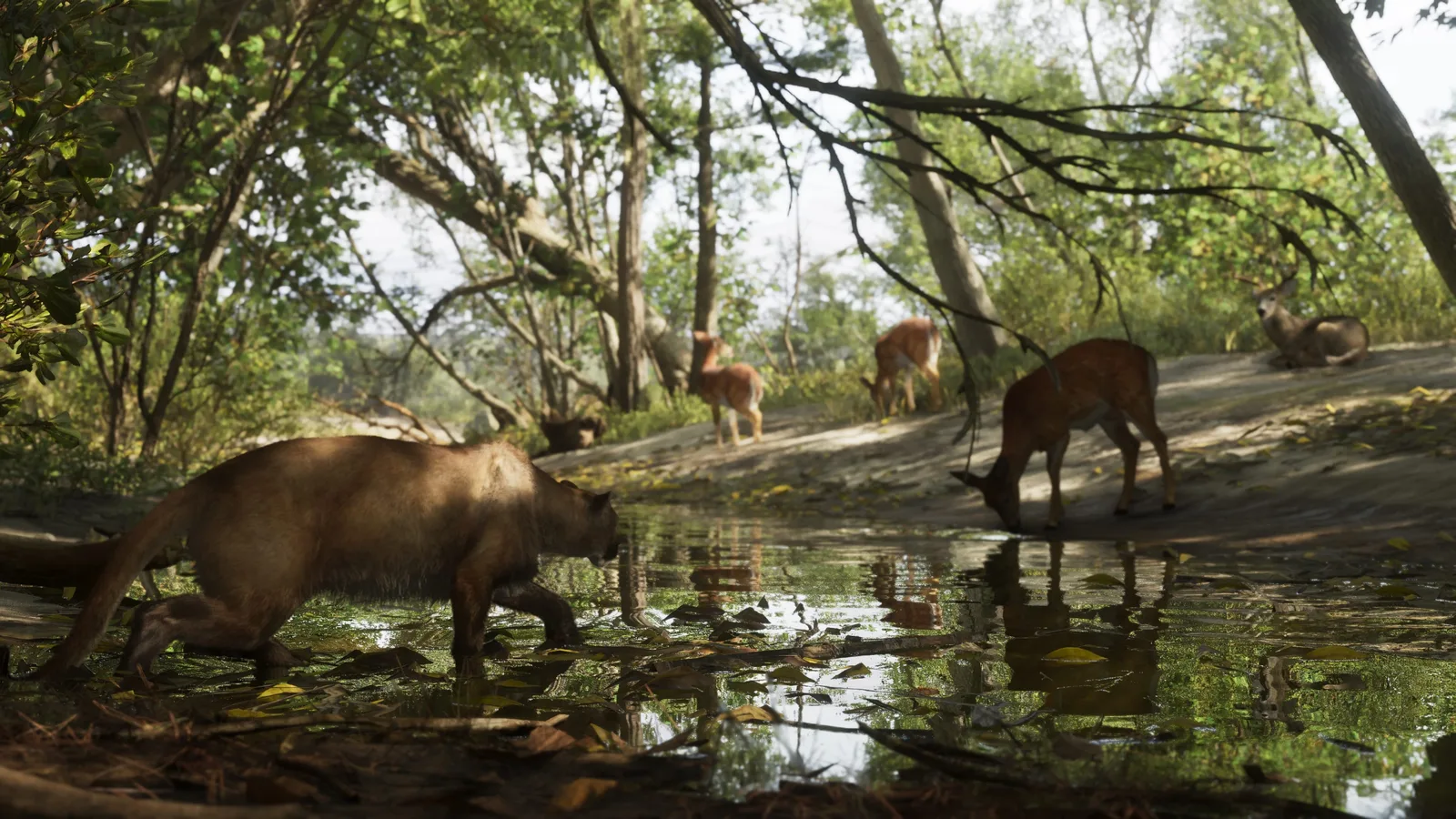
Rockstar’s Mount Kalaga imagery already depicts cougars and deer near a stream. Mount Kalaga is a region within Leonida, not a single animal spawn point. The image provides regional context for the report but no tested search route. Reliable finding instructions would require precise locations and repeatable encounters, which those images alone do not establish.[2]
Birds, Land Mammals and Another Reported Animal
Accompanying preview coverage reports approximately 60 bird species and more than 30 land mammal species. Wording differs slightly: GameStar rounds the figures, whereas TechRadar describes over 60 birds. These groups are part of the overall figure of more than 170, rather than 90 additional species. GameStar also names armadillos. IGN now identifies them as nine-banded armadillos; habitats and exact locations remain unspecified.[4][3]
Wet Fur and Different Movements
GameStar and Rockstar Mag add wet or dirty animal surfaces and matted fur to the technical description. TechRadar also reports researched movement and animation for different species. These details explain more about animals’ intended appearance and motion. They do not establish which animals hunt one another or how their behaviour works over time. The articles draw on overlapping Game Informer reporting rather than independent gameplay tests.[4]
Animals in Ign's Current Overview
IGN's September 30 overview groups animal names from released images, trailers and previews. It expands the examples from the developer interview, without covering every announced species. Broad labels such as fish and snakes can contain multiple species.[3]
Land Animals: Beavers, Bobcats and More
The land group includes beavers, boars, bobcats, cane toads, domestic and feral cats, cougars, deer, dogs, iguanas, monkeys, armadillos, otters, raccoons, snakes and squirrels. IGN specifically names rhesus macaques and nine-banded armadillos. Its dog list includes Chihuahua, Doberman, German Shepherd and Rottweiler.[3]
Aquatic Animals: Dolphins, Jellyfish and Sharks
The aquatic group covers alligators, dolphins, eels, fish, jellyfish, manatees, sea turtles, sharks and whales. Inclusion does not establish fixed spawn points, fishing rewards or hunting rules.[3]
Birds: Ten Listed Groups
IGN's birds include ducks, eagles, flamingos, cranes, pigeons, pelicans, seagulls, spoonbills, storks and woodpeckers. Those labels are not a complete biological classification. The linked entries collect the sourced information; precise observation locations remain open.[3]